Recovery / Reinvention
Dr. K
“He inspired within me a new attitude, a new way of looking at my life, urging me to focus on what I had left and what I could do with it, rather than complaining about what had been lost.”
— Senator Bob Dole, in his memoir, One Soldier’s Story
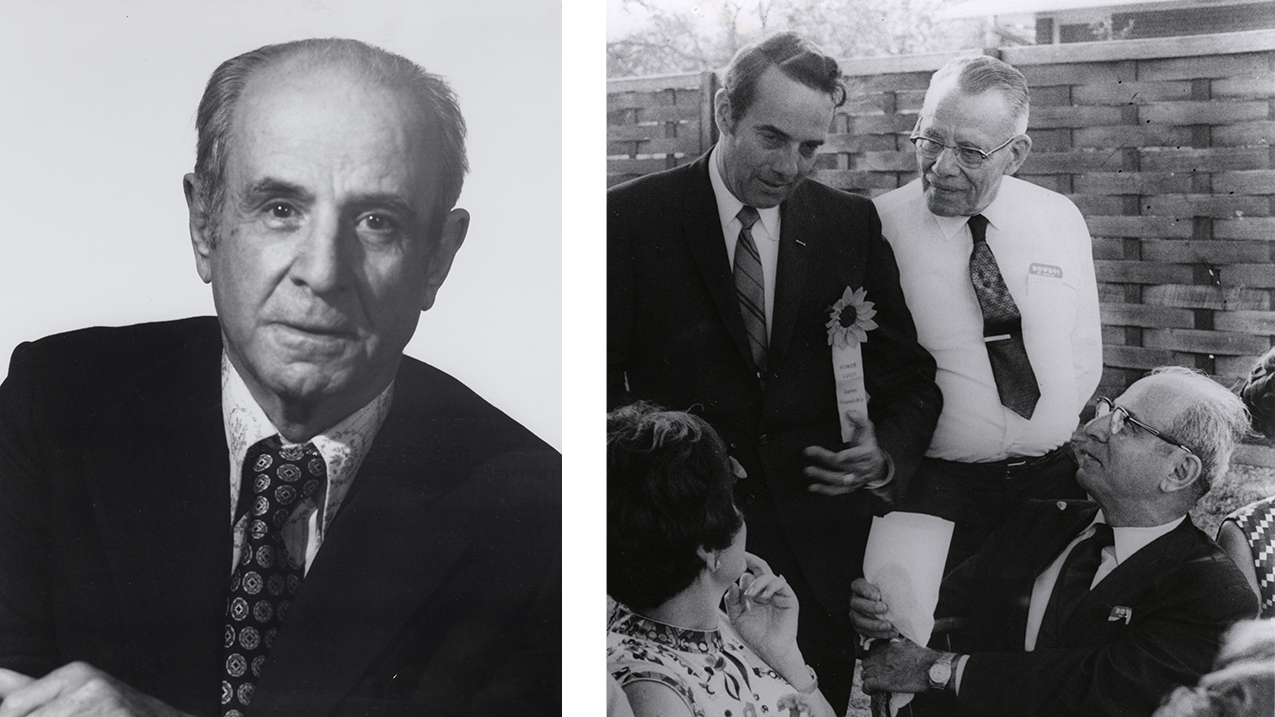
(above left) Dr. Hampar Kelikian in the 1960s.
(above right) Dr. and Mrs. Kelikian (seated) talk with Senator Bob Dole and his father, Doran Dole, at Friendship Day in Luray, Kansas, in September 1969.
Seeking to build a new life, Hampar Kelikian arrived in Chicago in 1920. He had been exiled from his ancestral lands in the Ottoman Empire and lost three sisters in the Armenian Genocide. Kelikian worked so hard as a farmhand that his employer helped pay for his college tuition at the University of Chicago. He eventually graduated from medical school and emerged as one of the preeminent orthopedic surgeons in the United States.
Recovering from grave wounds sustained in Italy on April 14, 1945, a young Bob Dole found Dr. Kelikian. Over seven years, Kelikian – who Dole affectionally called “Dr. K” – operated on him seven times at no charge.
Dr. K’s enduring impact on Senator Dole’s life came not just from his surgeries, but through the stories and experiences he shared with Dole about the genocide that had ravaged his homeland and family decades earlier.
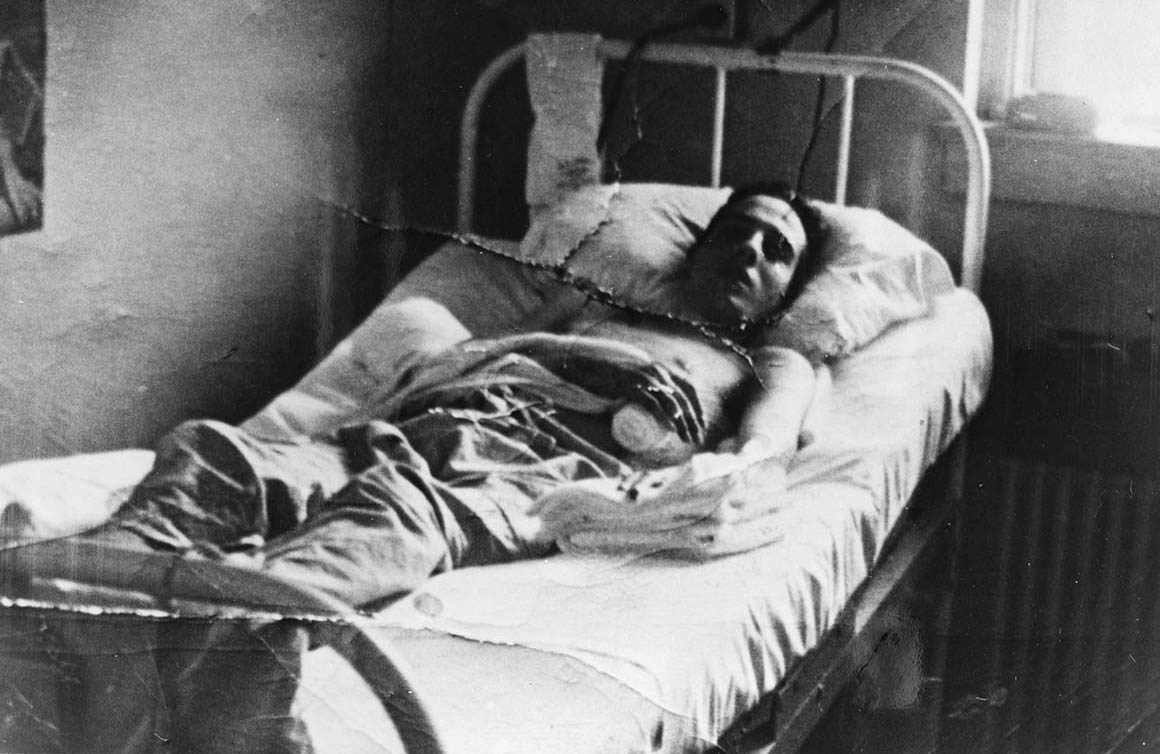
Desperate to return to the life he envisioned for himself before the war, Dole searched for a miracle. When his uncle told him about a pioneer orthopedist working with veterans in Chicago, the future senator jumped at the chance. Dole hoped that, perhaps, this physician would give him his life back.
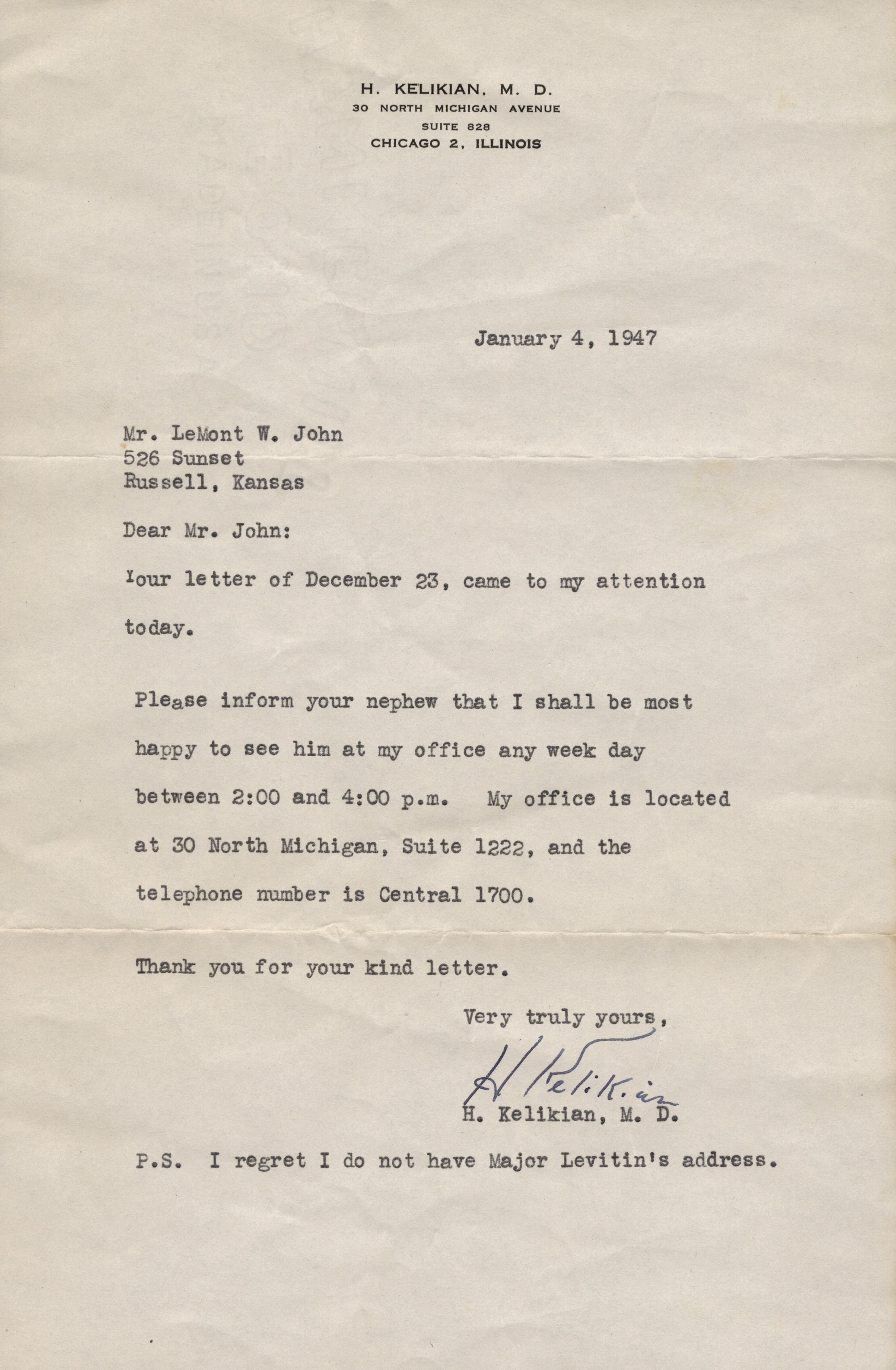
Dr. Kelikian writes to Dole's uncle, LeMont W. John, in this letter from January 4, 1947, that he would be happy to see his nephew.
During World War II, Dr. Kelikian served as Lieutenant Colonel, Chief of Orthopedic Surgery at the 297th General Hospital Overseas. For his service, President Harry Truman gave him a citation and medal.
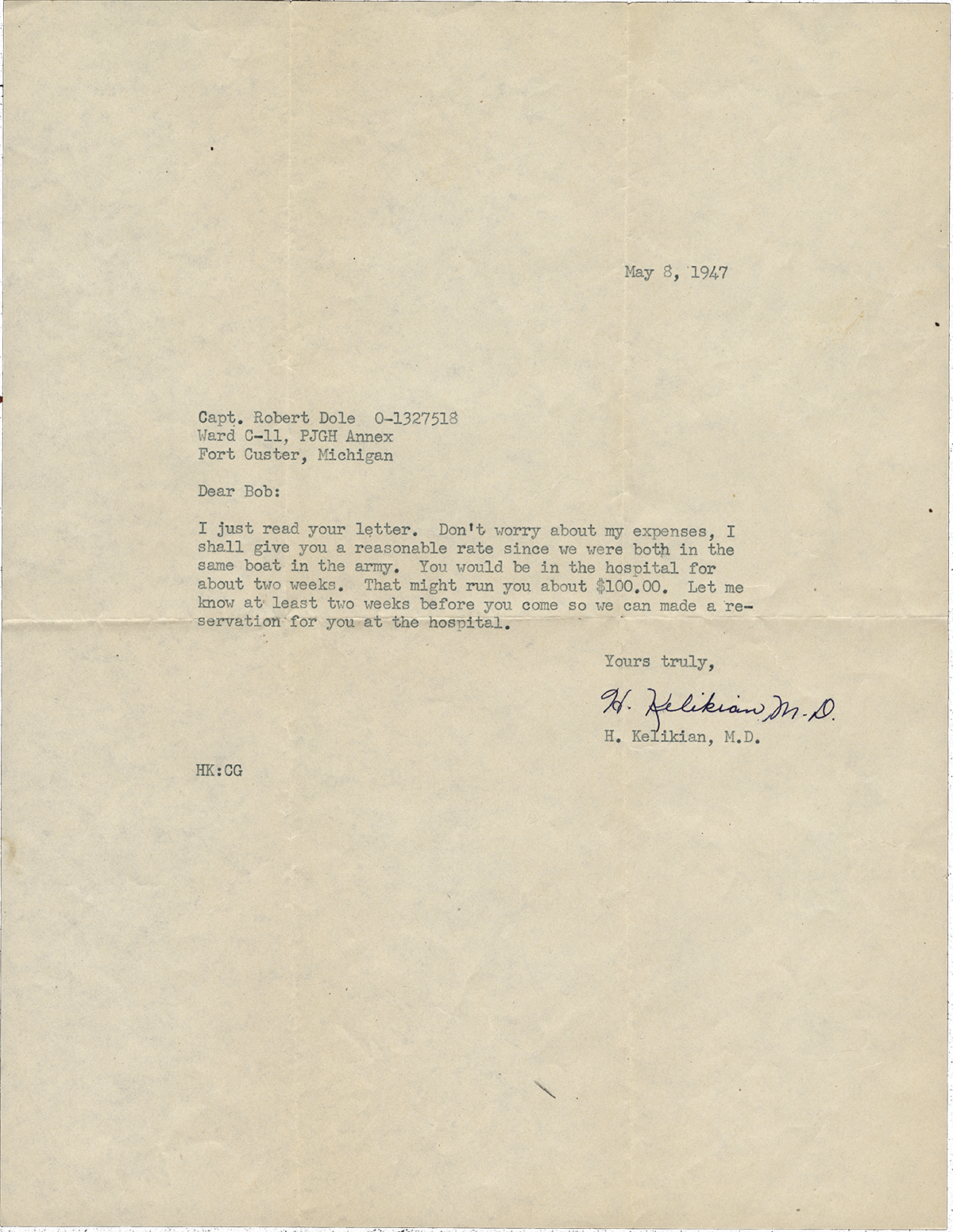
In honor of his brother, Siragan, who was killed fighting in Italy in 1943, Kelikian offered his services to badly wounded servicemen at no charge after the war. In this letter from May 8, 1947, he tells Dole: “Don’t worry about my expenses, I shall give you a reasonable rate since we were both in the same boat in the army.”
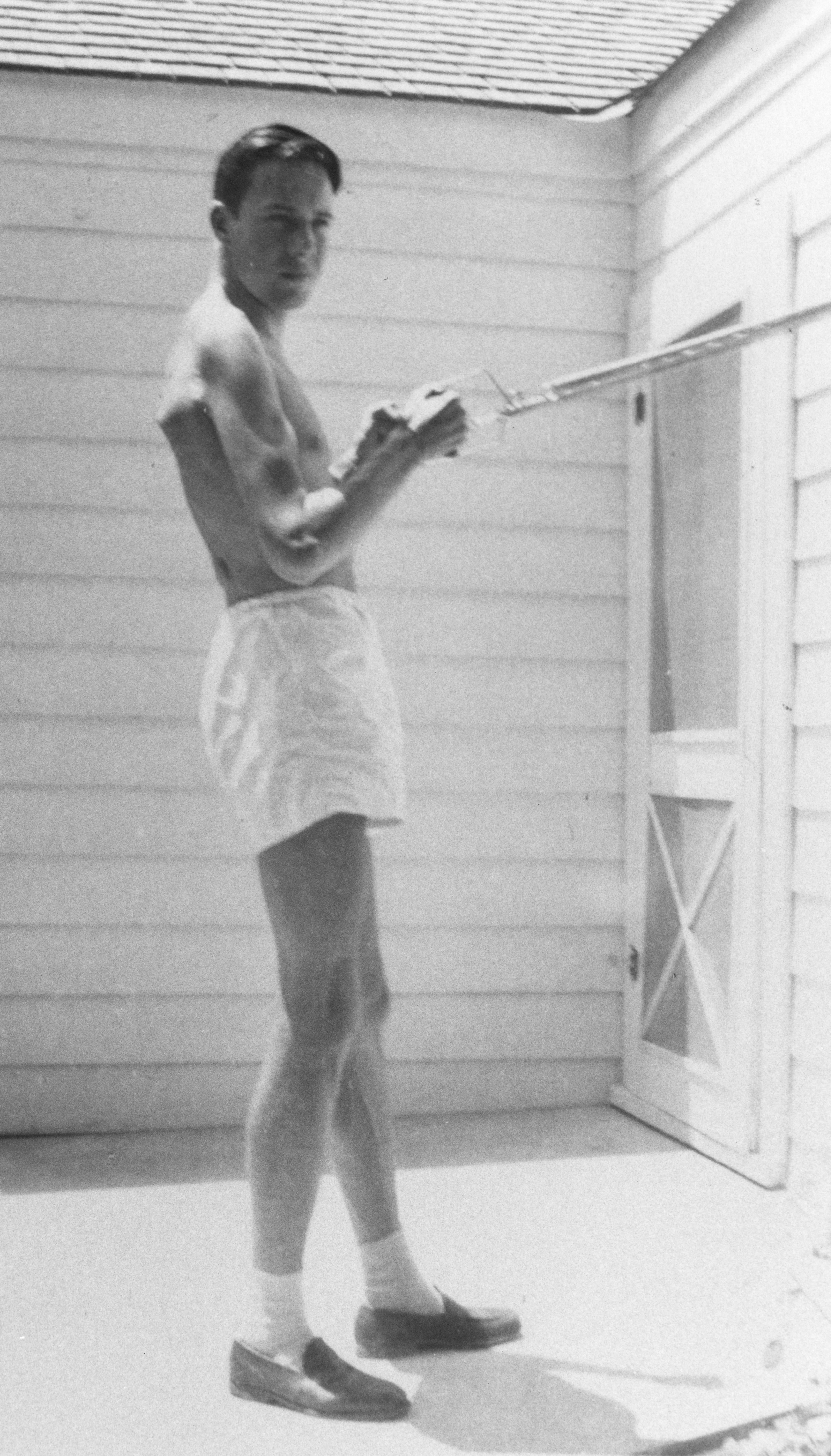
Dole’s father, brother, and friends devised a system of weights and pulleys, hung on the garage wall, for building strength and stamina during his recovery.
Recovery
From his promotion to Captain to sorting out issues with veterans’ benefits, elected representatives from Kansas took an active role in advocating for the young Bob Dole.
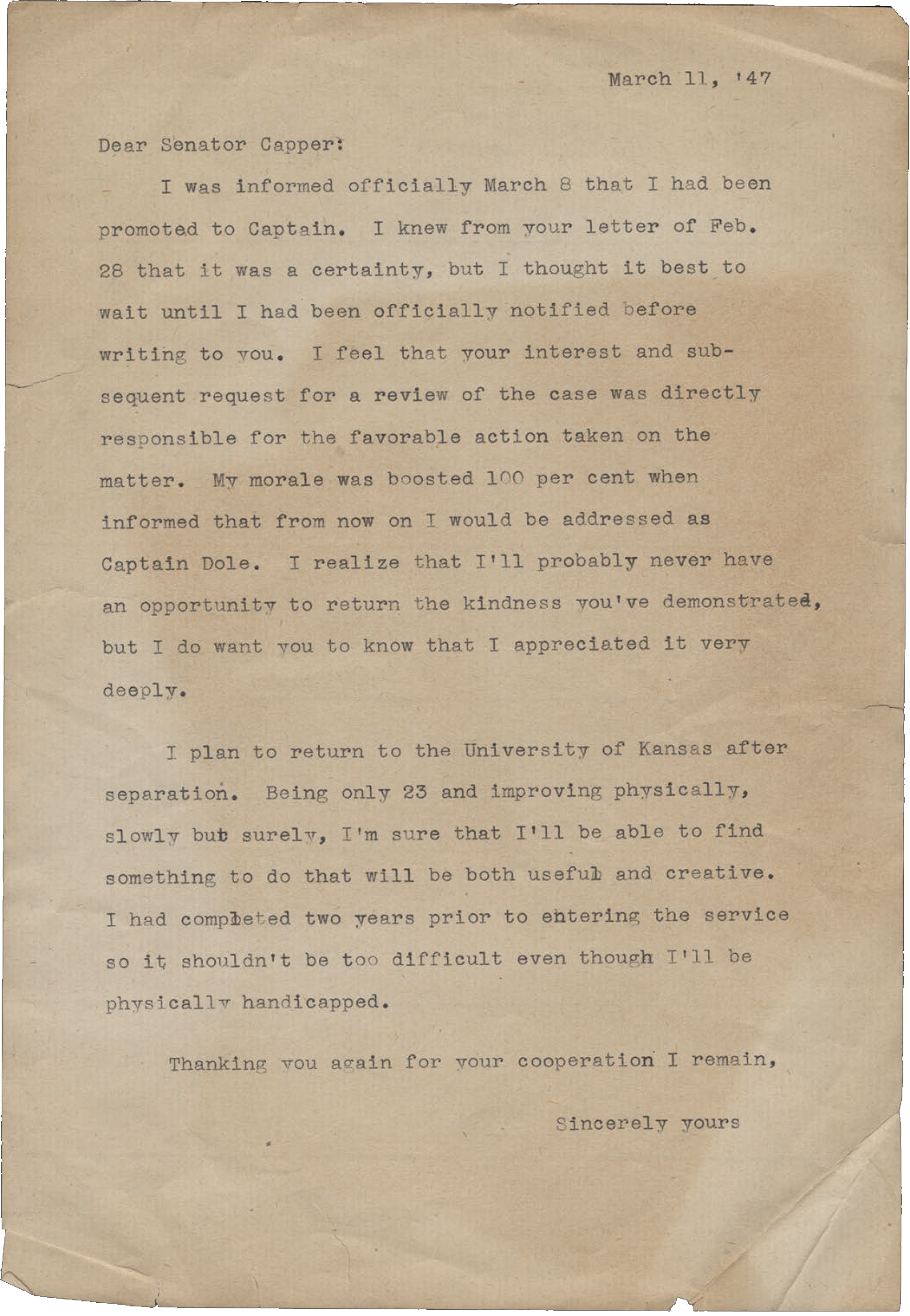
Nearly two years into his recovery, in March 1947, Dole writes to Senator Arthur Capper: “Being only 23 and improving physically, slowly but surely, I’m sure that I’ll be able to find something to do that will be both useful and creative.”
At this point, Dole was still holding out hope for a miracle, explaining in a 1964 feature in the Chicago Tribune, “I still had ideas of playing football and basketball when I returned to college.”
In a letter to his parents in April 1947, Dole describes a recent visit to a doctor that was disappointing because “he had spent such a short time with me. He looked at a couple of x-rays and spent a little time examining my shoulder so I really wasn’t encouraged a lot after seeing him.”
However, he continued: “I’m going to see another Dr. in Chicago within the next two weeks.”
This would be Dr. Kelikian.
Dole had to advocate for his own care, especially to receive care from providers outside of the Veterans Administration system. In this undated April 18 letter draft, he asks permission for Dr. Kelikian to perform additional surgeries to restore partial function to his arm.

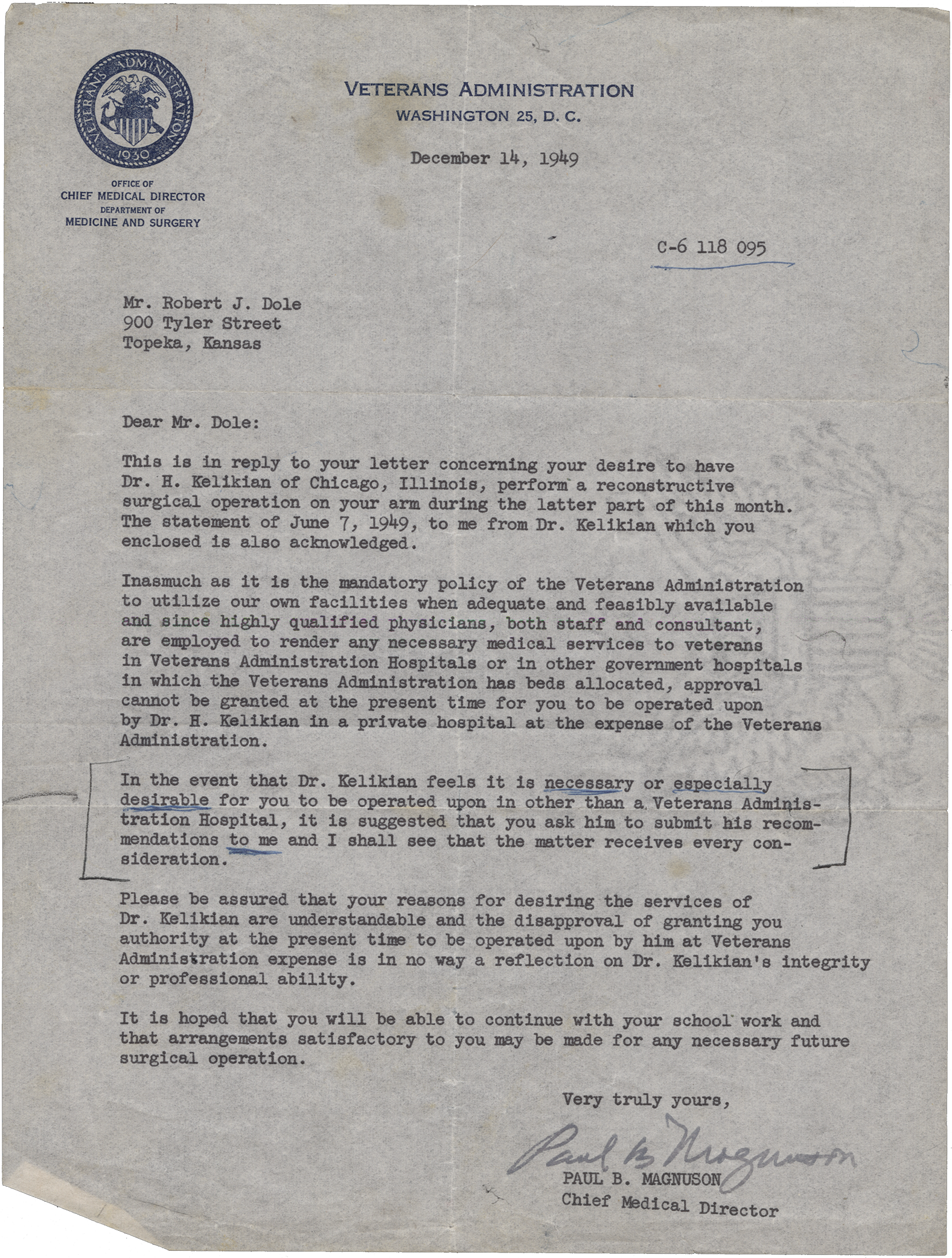
In December 1949, the Veterans Administration informed Dole that “approval cannot be granted” for Kelikian to operate on him in a private hospital at administration expense. Kelikian could, however, write to the VA directly for consideration.
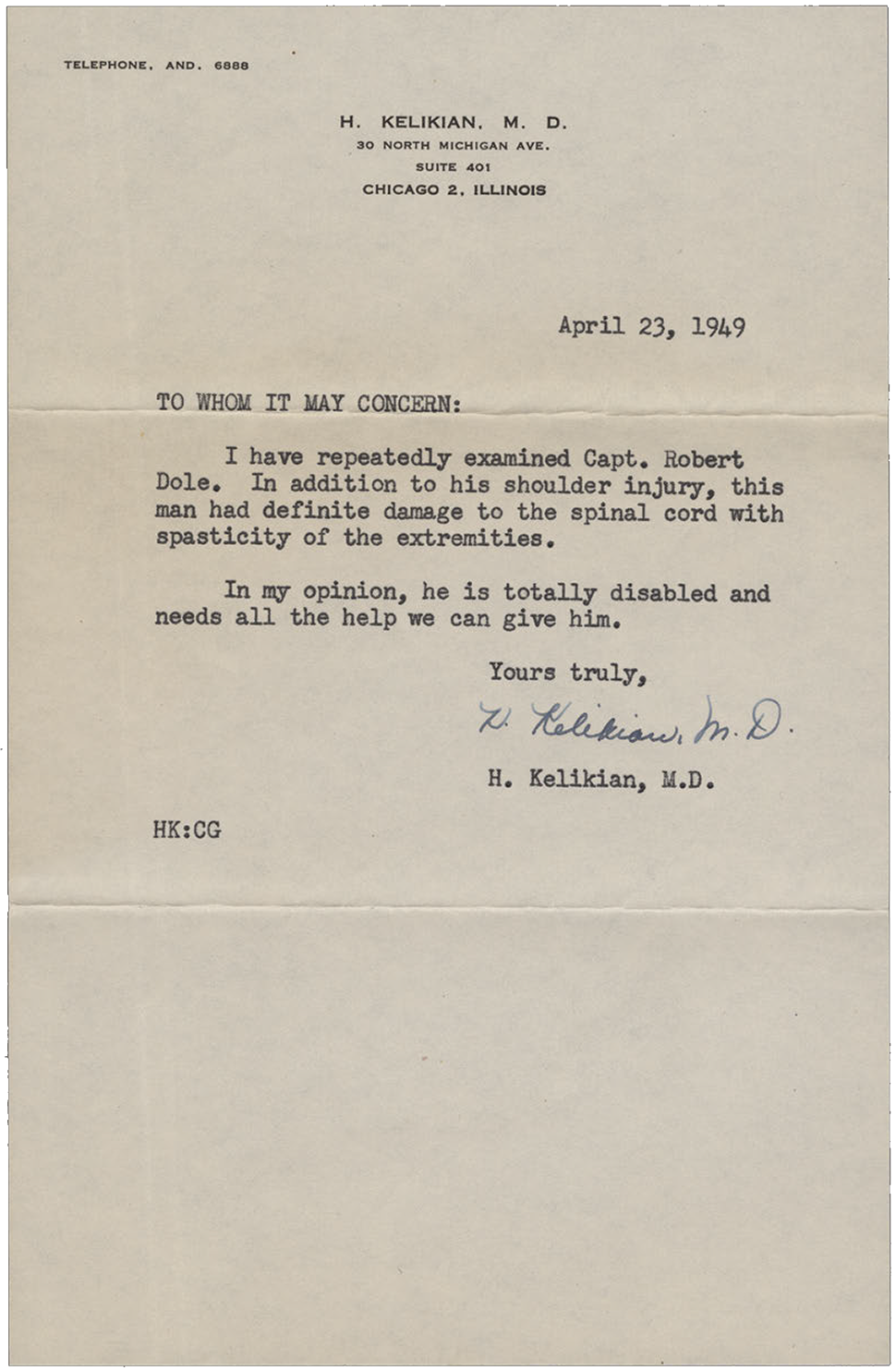
Outside of surgery, Kelikian assisted Dole by providing reference letters. This example from April 1949, declares that Dole “needs all the help we can give him.”
Kelikian’s surgeries would manage to return some mobility to Dole’s left arm, although not his right.
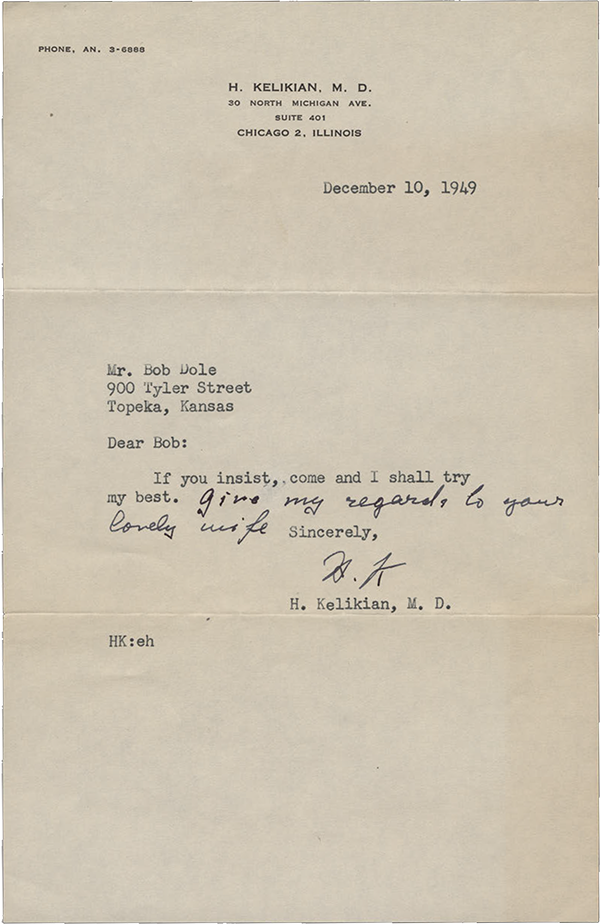
Nearly two and a half years after first meeting, Dr. Kelikian replies to Dole simply, “If you insist, come and I shall try my best.”
Reinvention
In 1964, The Chicago Tribune published a profile on Bob Dole, a young and up-and coming Republican in the House of Representatives from Kansas. Dr. Kelikian – and the role he played in Dole’s recovery – featured prominently in the article.
Read Full Text Only for Chicago Tribune article (TXT)
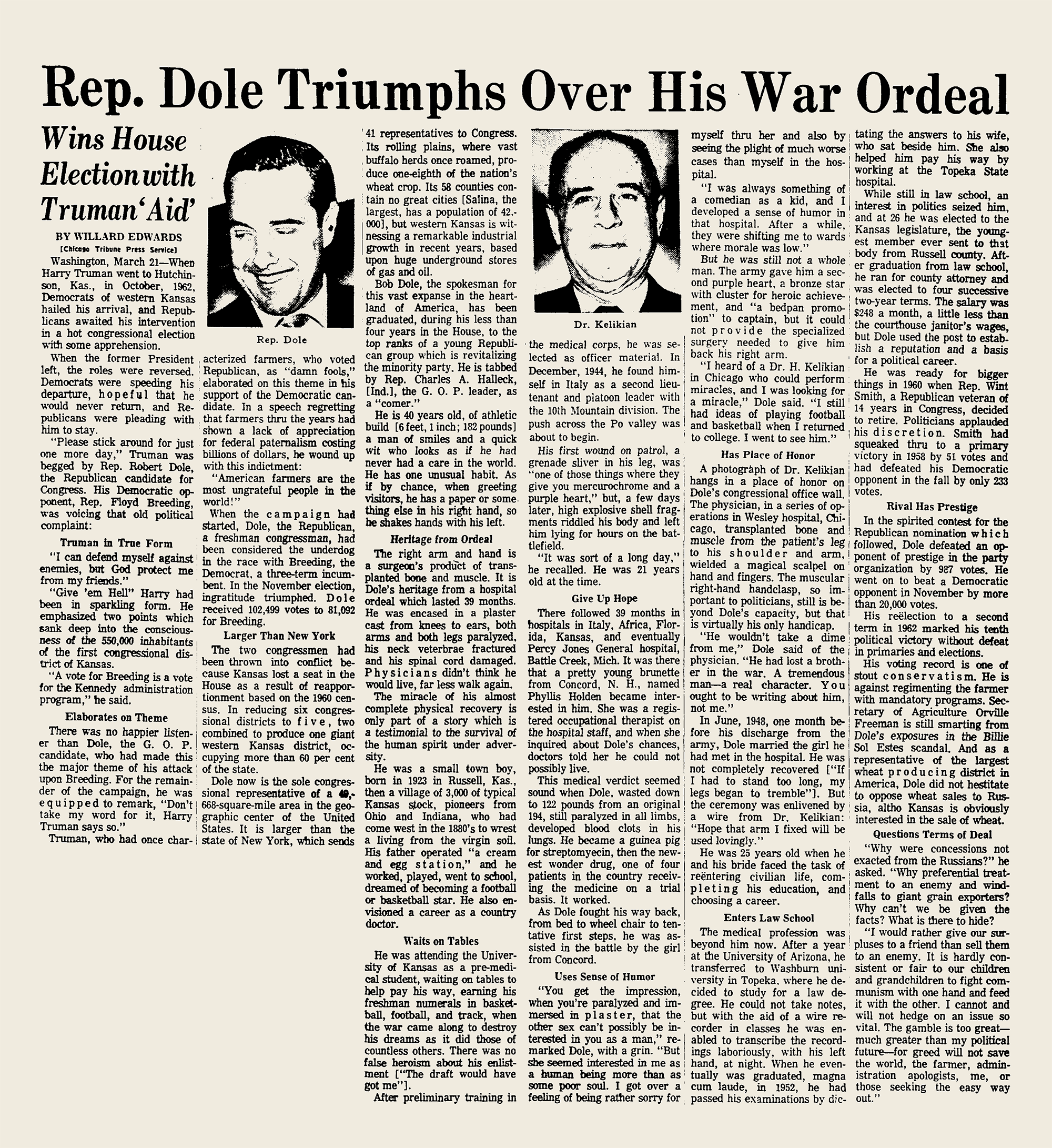
Article published in The Chicago Tribune, March 22, 1964.
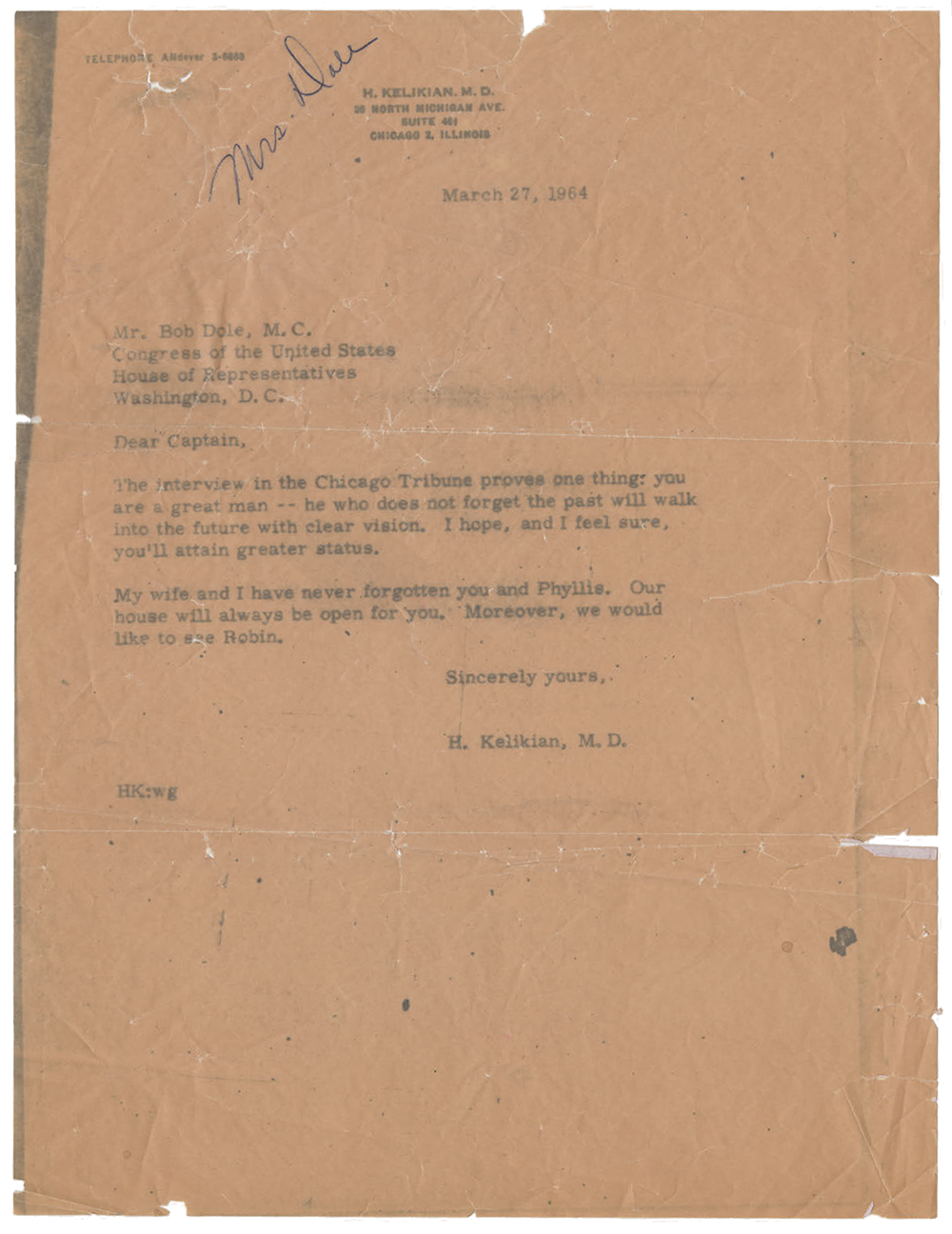
Kelikian wrote to Dole in response to the article, “The interview… proves one thing: you are a great man -- he who does not forget the past will walk into the future with clear vision. I hope, and I feel sure, you’ll attain greater status.”
This is Your Day, Senator Bob Dole

On September 6, 1969, Senator Bob Dole was honored by Luray, Kansas, at their annual Friendship Day. Based on the old television show, This Is Your Life, the event celebrated Russell County’s most distinguished citizen.
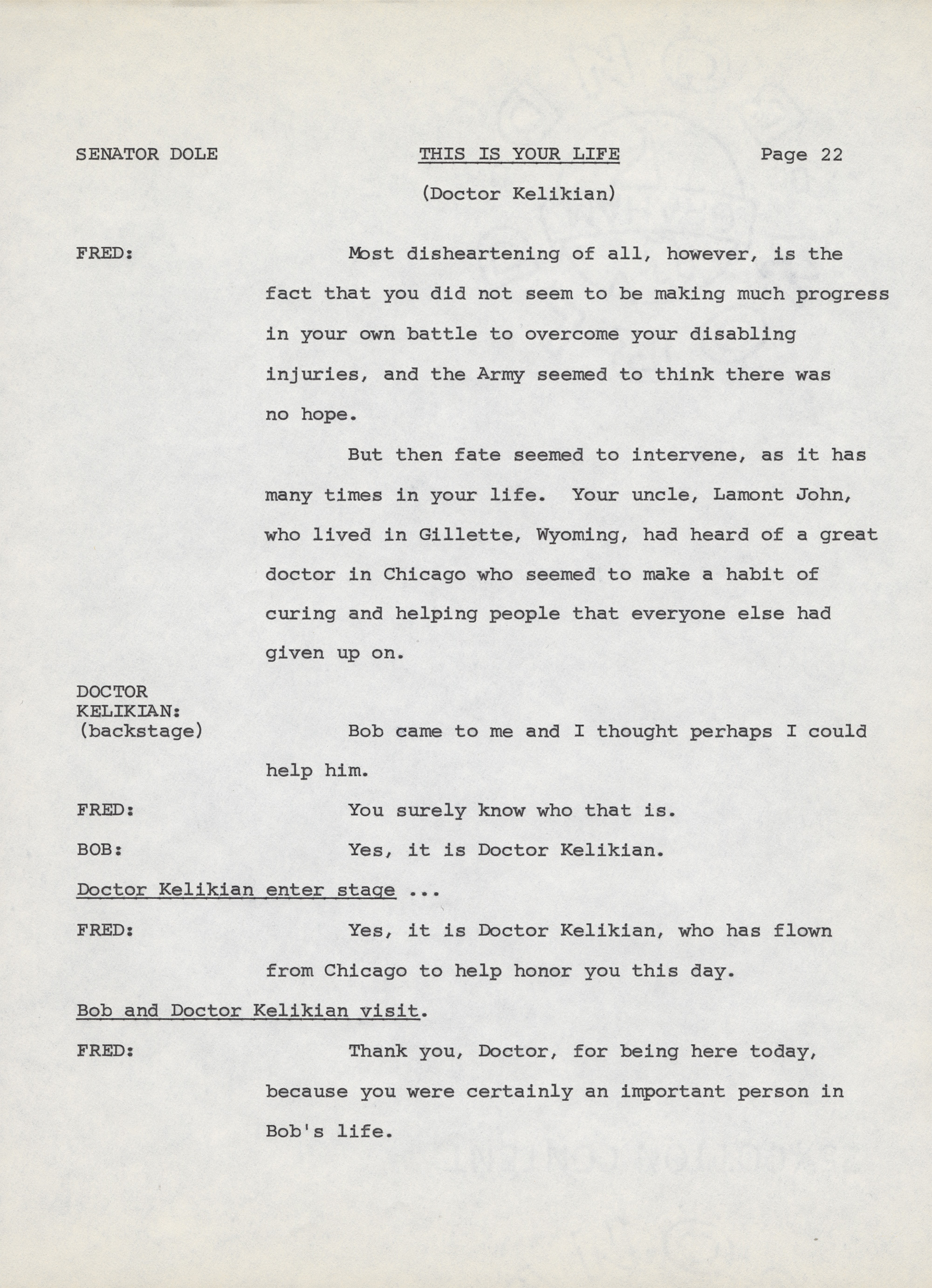
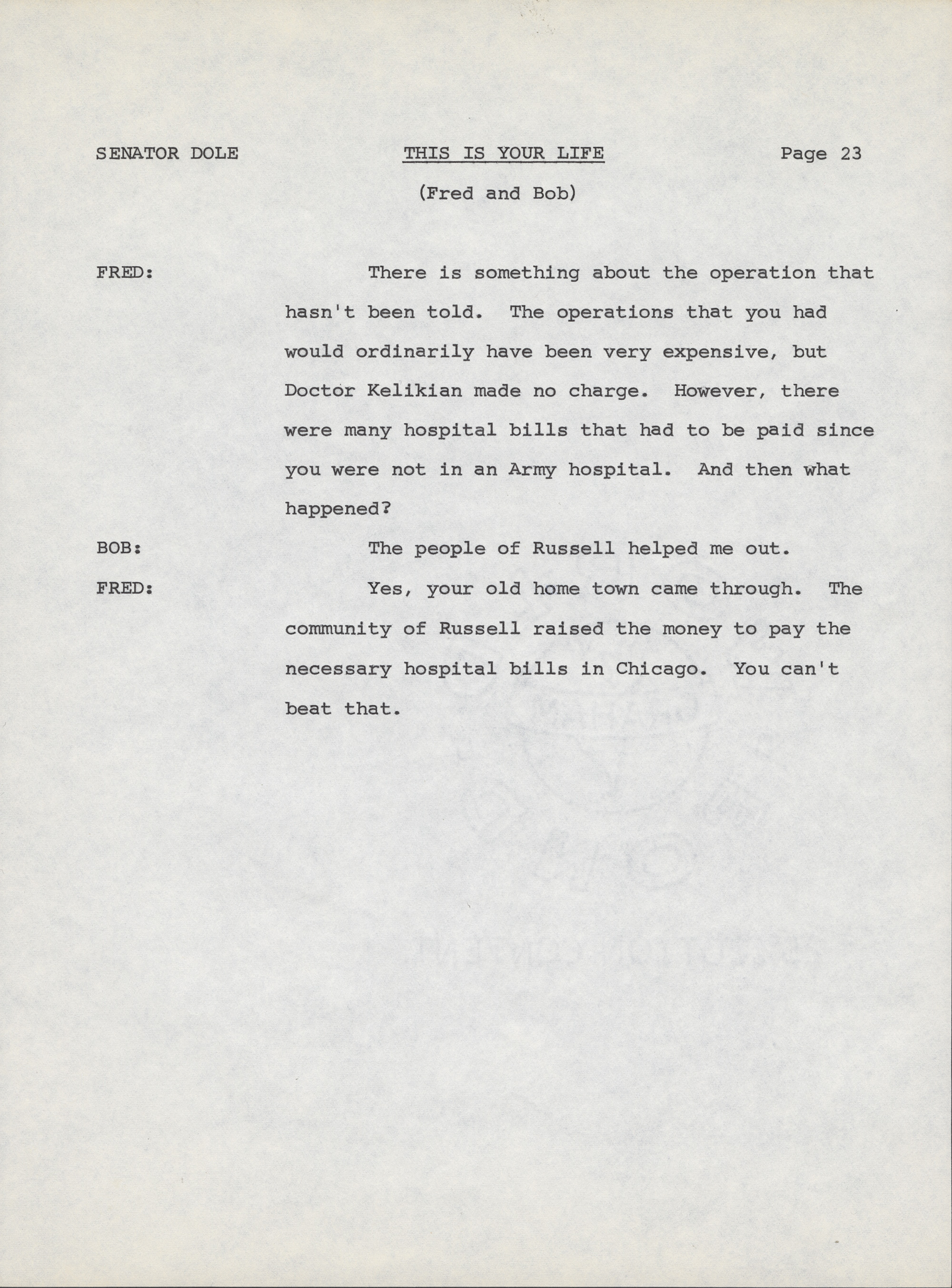
Throughout the program, over 40 individuals who played major roles in his life joined Dole on stage. According to newspaper coverage, Dole was “particularly surprised” and “visibly emotional” when Dr. Kelikian was introduced. The doctor had traveled all the way from Chicago – as a surprise – for the festivities.
Below, two pages from the event transcript showing how Dr. Kelikian was revealed.
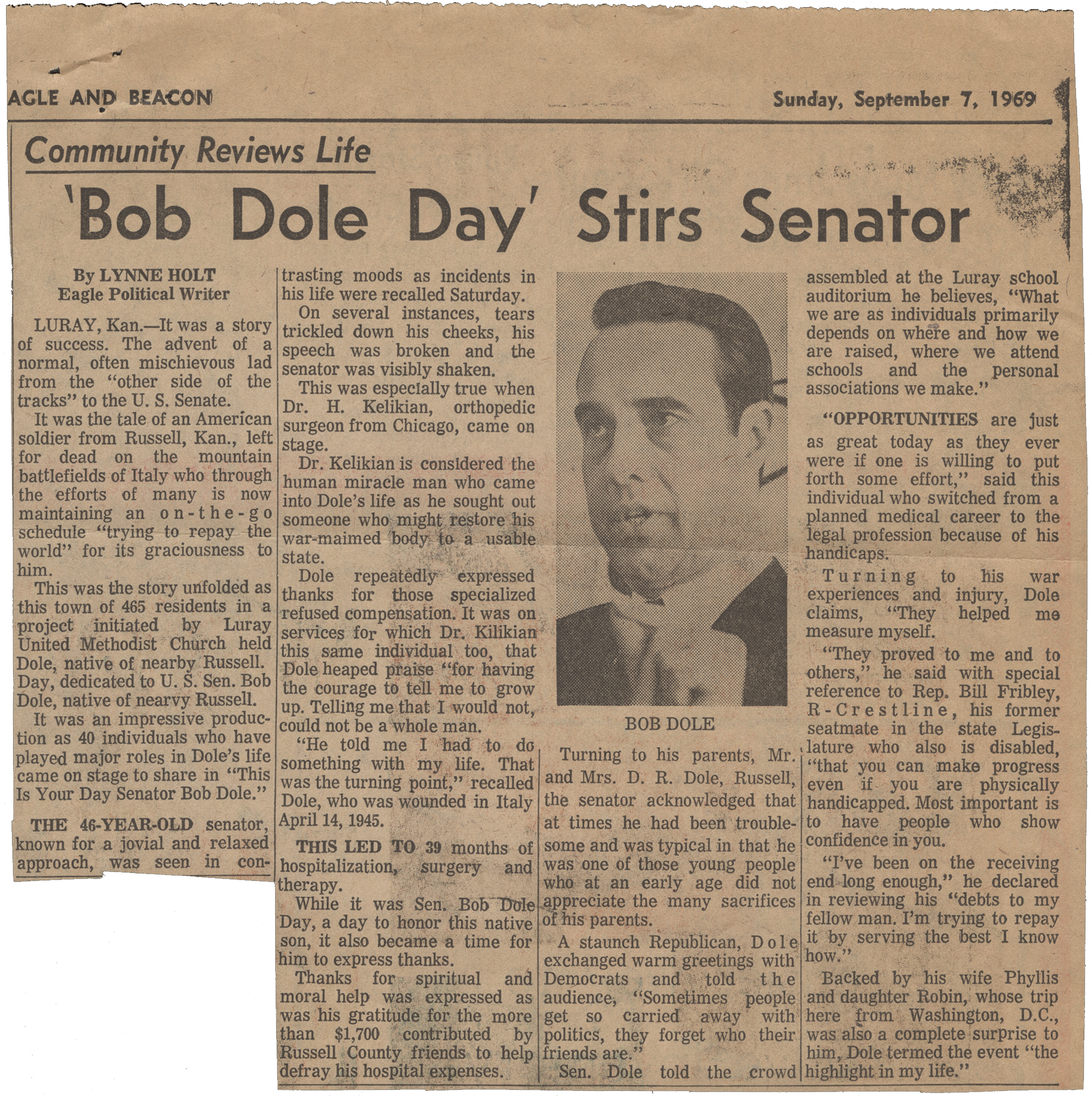
An article from The Wichita Eagle and Beacon about Friendship Day describes Dr. Kelikian as “the human miracle man who came into Dole’s life as he sought out someone who might restore his war-maimed body to a useable state.”
Dole explains that Kelikian told “me to grow up… that I would not, could not be a whole man. He told me I had to do something with my life. That was the turning point.”
Senator Dole wrote thank you notes to all the event participants, including Dr. and Mrs. Kelikian.
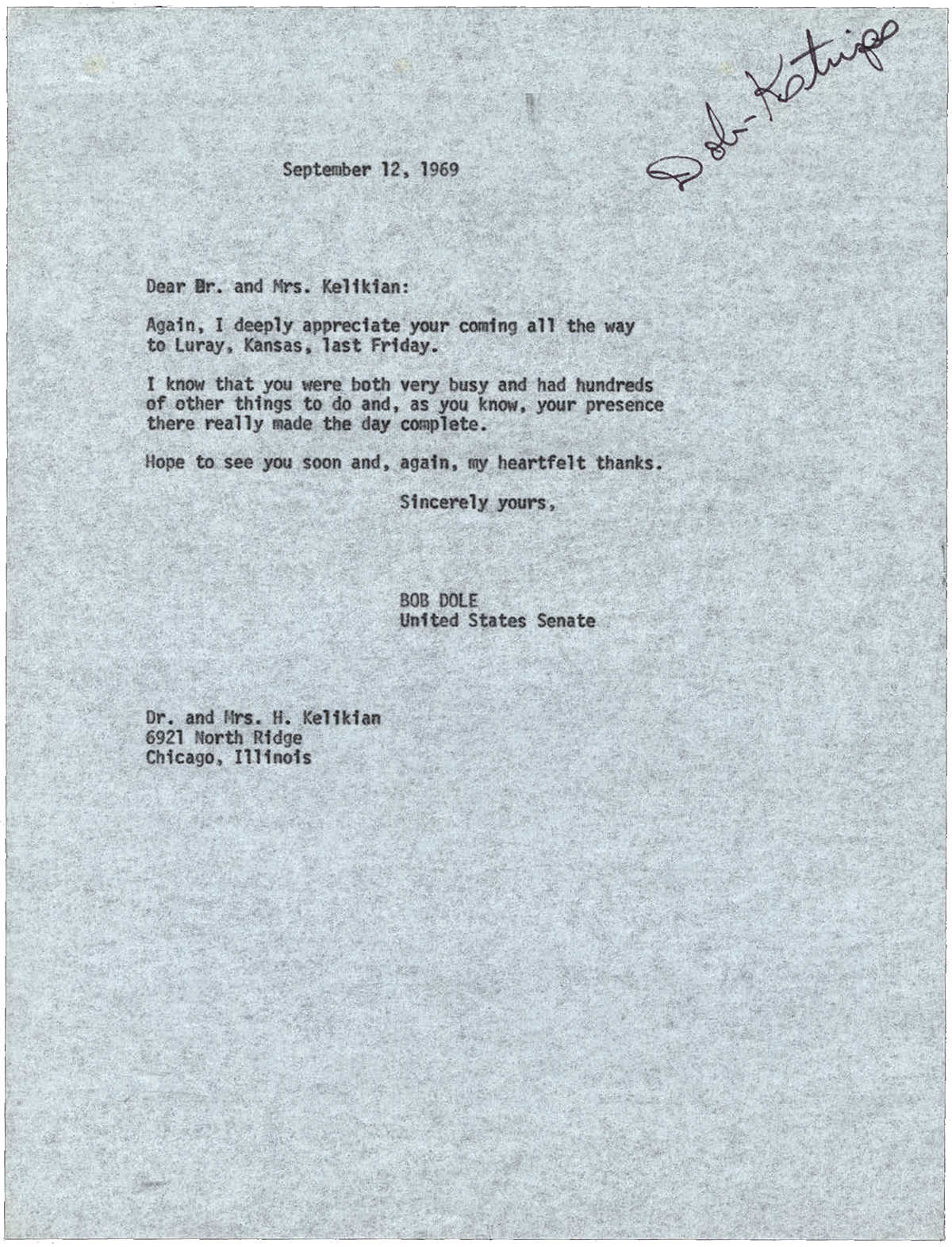
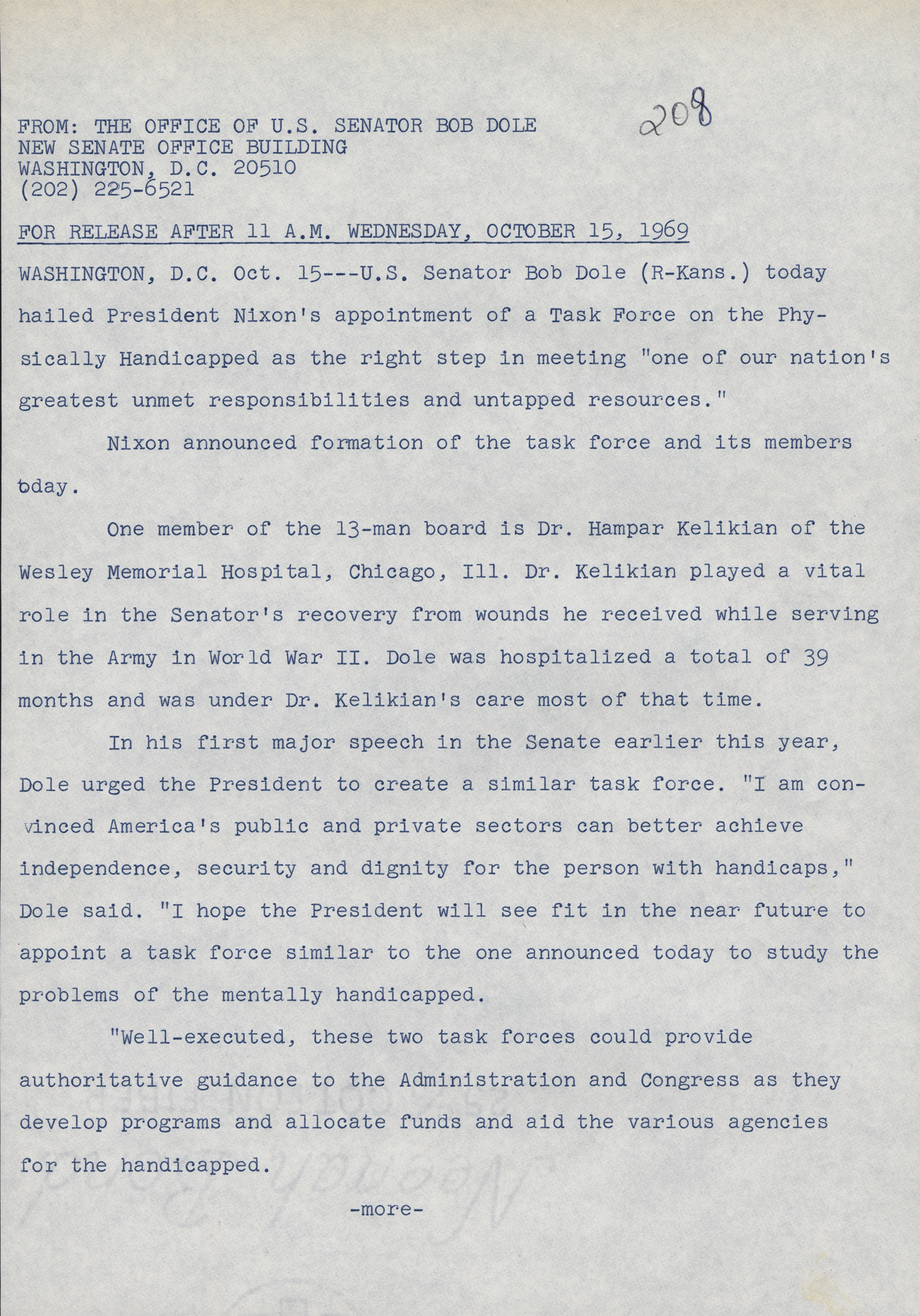
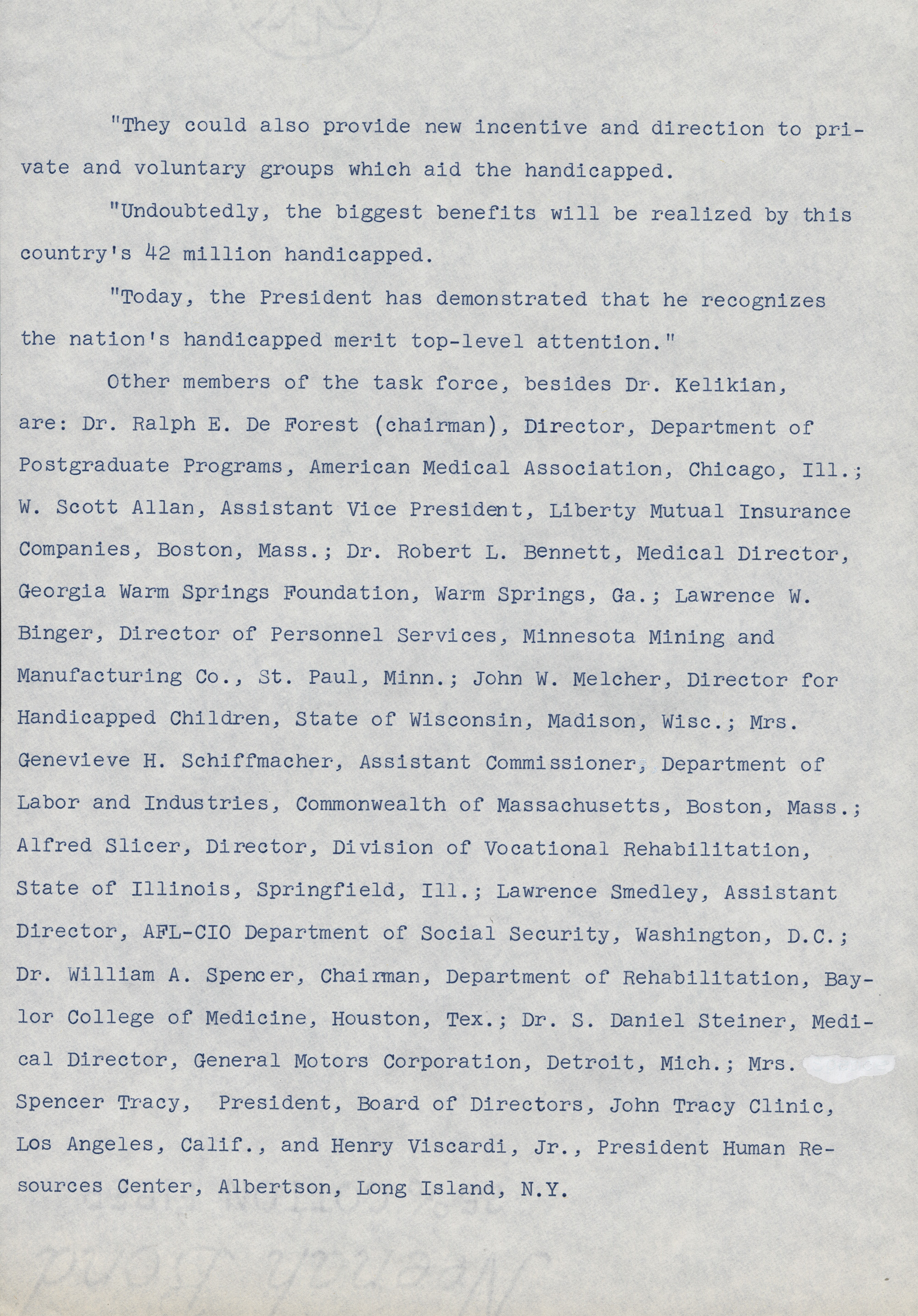
Following the event, Senator Dole wrote to the White House to recommend Dr. Kelikian for President Nixon’s Taskforce on the Physically Handicapped.
(below) A month later, on October 15, 1969, Dr. Kelikian was announced as a member of the task force. Dole, in his first major speech in the Senate earlier in the year, called for Nixon to create a similar task force.