
Looking History in the Eye
"But those of us who are willing to look history in the eye, and who see the danger of closing our eyes and hearts to the truth of the tragedy which took place, will not cease in our efforts to remember what happened...
...Only in that way can we help ensure that these horrible events will never again take place."
- Senator Bob Dole, calling for official recognition of the Armenian Genocide on its 77th anniversary on the floor of the U.S. Senate, April 29, 1992
Although Senate Joint Resolution 212 failed in 1990, Senator Bob Dole continued to advocate for Armenians, and his support made it possible for the U.S. to finally recognize the Genocide.
The U.S. House of Representatives voted overwhelmingly to formally recognize the Armenian Genocide on October 29, 2019, with the U.S. Senate following weeks later in a unanimous vote on December 12.
On April 24, 2021 – Armenian Remembrance Day and 106 years since the Genocide began – President Joe Biden issued a statement remembering “those who died in the Ottoman-era Armenian genocide.” His statement goes on to acknowledge the Genocide survivors, like Dr. Kelikian:
"Of those who survived, most were forced to find new homes and new lives around the world, including in the United States.
With strength and resilience, the Armenian people survived and rebuilt their community. Over the decades Armenian immigrants have enriched the United States in countless ways, but they have never forgotten the tragic history that brought so many of their ancestors to our shores.
We honor their story. We see that pain. We affirm the history.”
Turkey continues to deny that the killings amount to genocide.
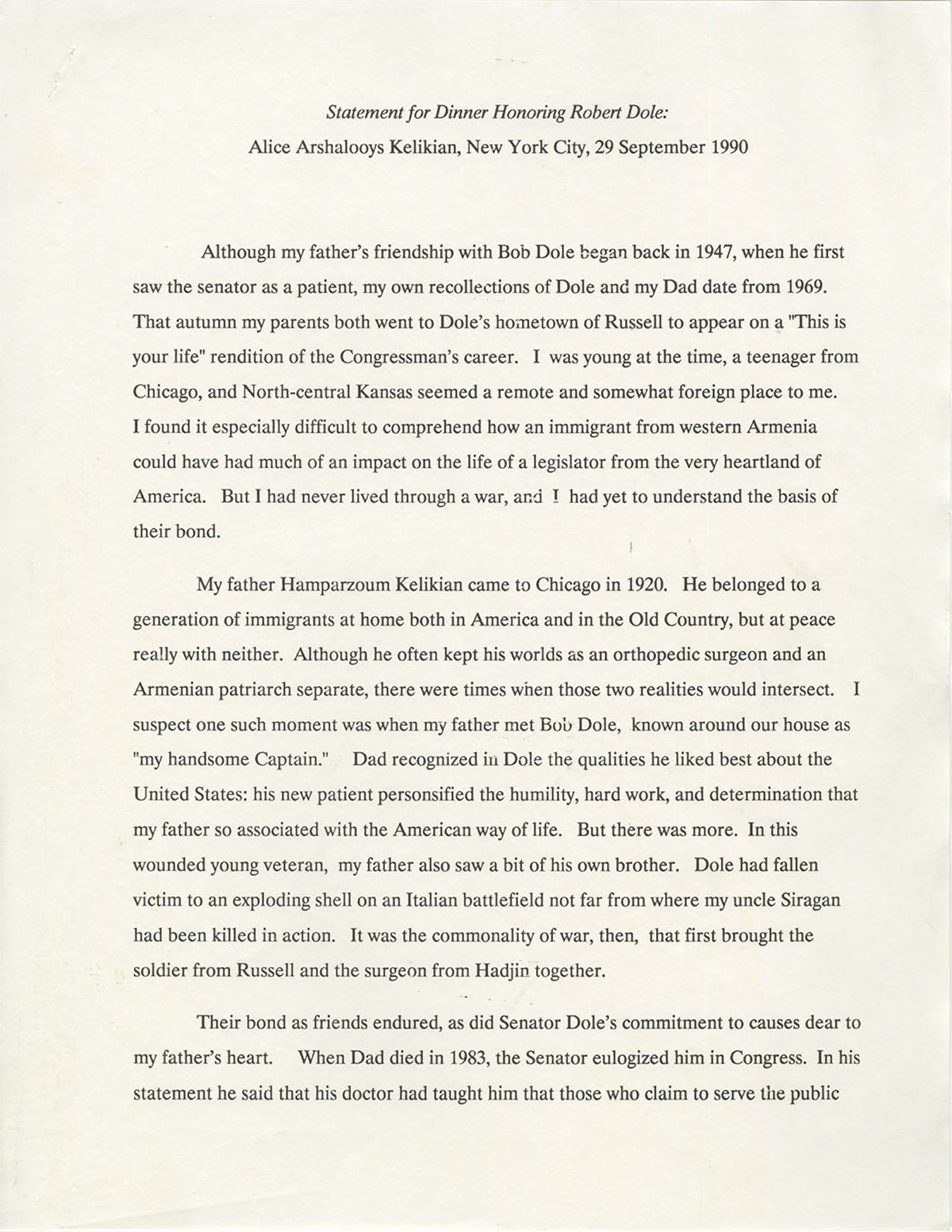
Months following the failed passage of Senate Joint Resolution 212 in February 1990, Dr. Kelikian’s daughter, Alice, spoke about her father’s friendship with Senator Bob Dole:
“It was the commonality of war, then, that first brought the soldier from Russell and the surgeon from Hadjin together.”
She recounted visiting Kansas in 1969 with her parents so her father could appear in a “This is your life” rendition of Dole’s career, and how “when Dad died in 1983, the Senator eulogized him in Congress.”
While she was relieved her father did not live to see his homeland devastated by the 1988 earthquake, Alice regretted that he could not also witness Senator Dole’s support for Armenia:
“How moved my father would have been to watch his Captain speak on the Senate floor about the deaths and the deportations that were the torment of his soul… I know I speak for all of my family when I say that I cannot have imagined a more compelling way to remember my father.”

The Armenian community acknowledged Senator Dole’s advocacy and friendship with many gifts and awards.
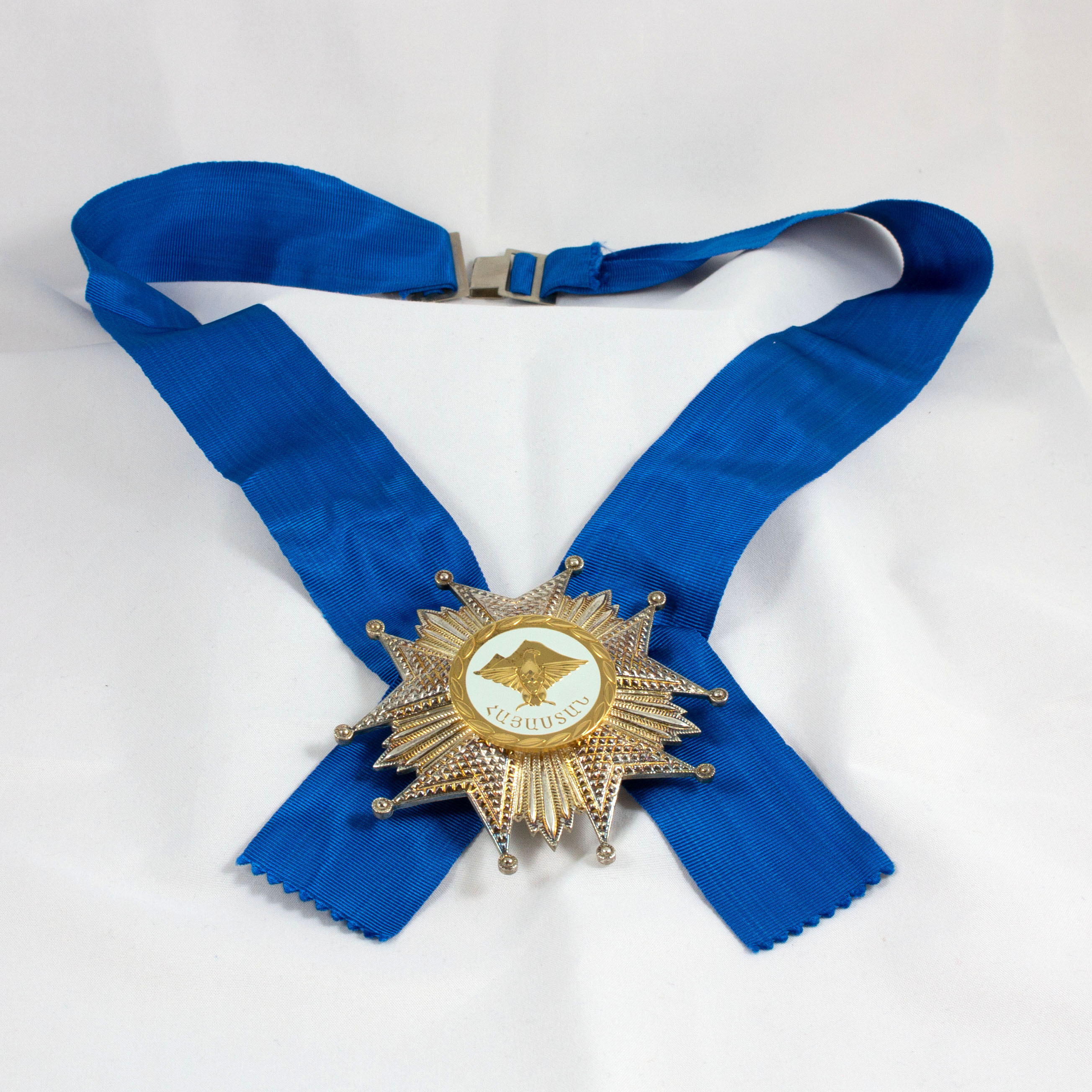
The National Commemoration of the Armenian Genocide Centennial presented Dole with their Survivors Gratitude Award as a “Hero of Responsibility and Principle” for his tireless efforts to bring attention to the Genocide in 2015.
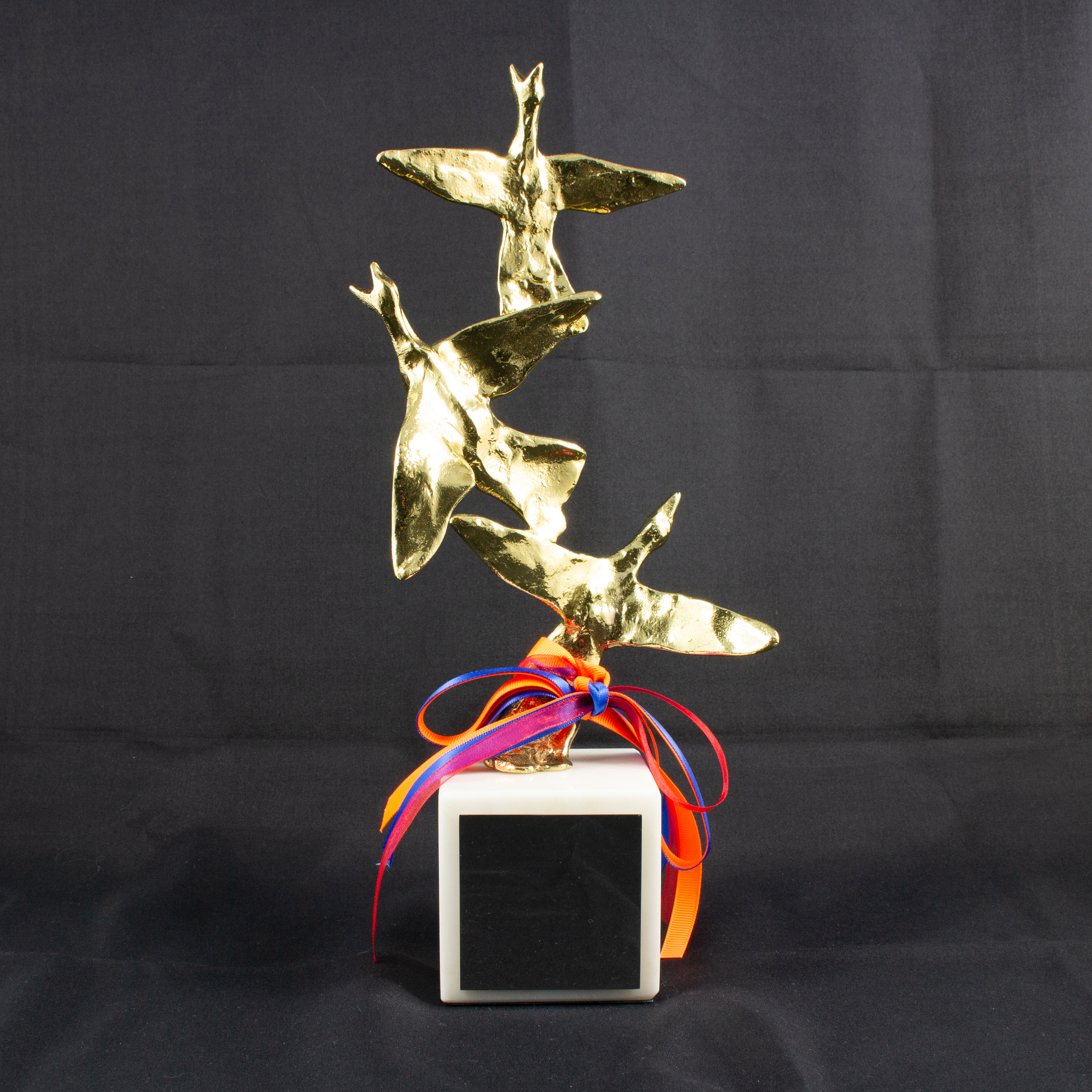
“Only by acknowledging
and accepting the past for what it is – however painful – can the world truly begin to work to heal and ensure a future free from genocide.”
- Senator Dole, accepting the Survivors Gratitude Award, September 30, 2015
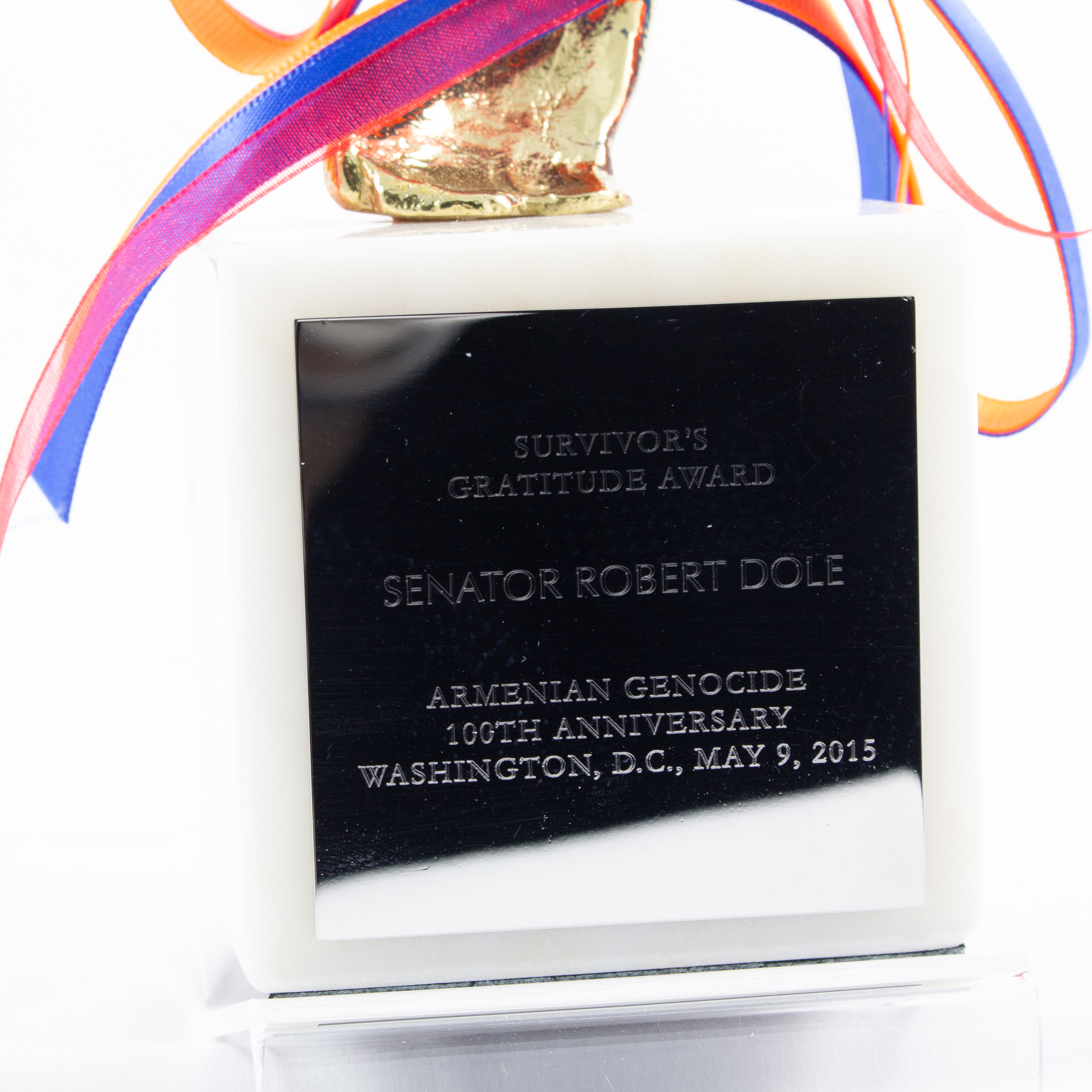
Armenian President Armen Sarkissian awarded Dole with the Armenian Order of Honor in 2019, for contributing to “the development and enhancement of the friendly ties between Armenia and the United States.”
The award is given to people for “protecting state and national interests of the Republic of Armenia and establishment of independence and democracy, as well as for significant contributions to building, strengthening, and promoting friendship and reinforcing peace between peoples.”
reflect
- What took the United States so long to recognize the Genocide?
- Has there been a pivotal person in your life?
- Why do you think the Armenian Genocide, which was widely documented at the time, is not well known?

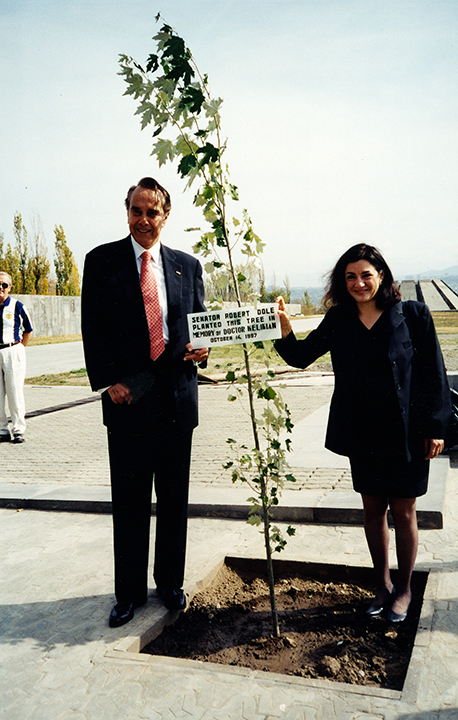
On a trip to Armenia in 1997, Senator Dole planted a tree in memory of Dr. Kelikian along with the surgeon's daughter, Alice. The tree was the first planted in the Memorial Alley at the Tsitsernakaberd Armenian Genocide Memorial in Yerevan, Armenia.