
A Forgotten Genocide
“Deportation of and excesses against peaceful Armenians is increasing and from harrowing reports of eye witnesses it appears that a campaign of race extermination is in progress…”
— U.S. Ambassador to the Ottoman Empire Henry Morgenthau, in a telegram to the State Department, July 16, 1915
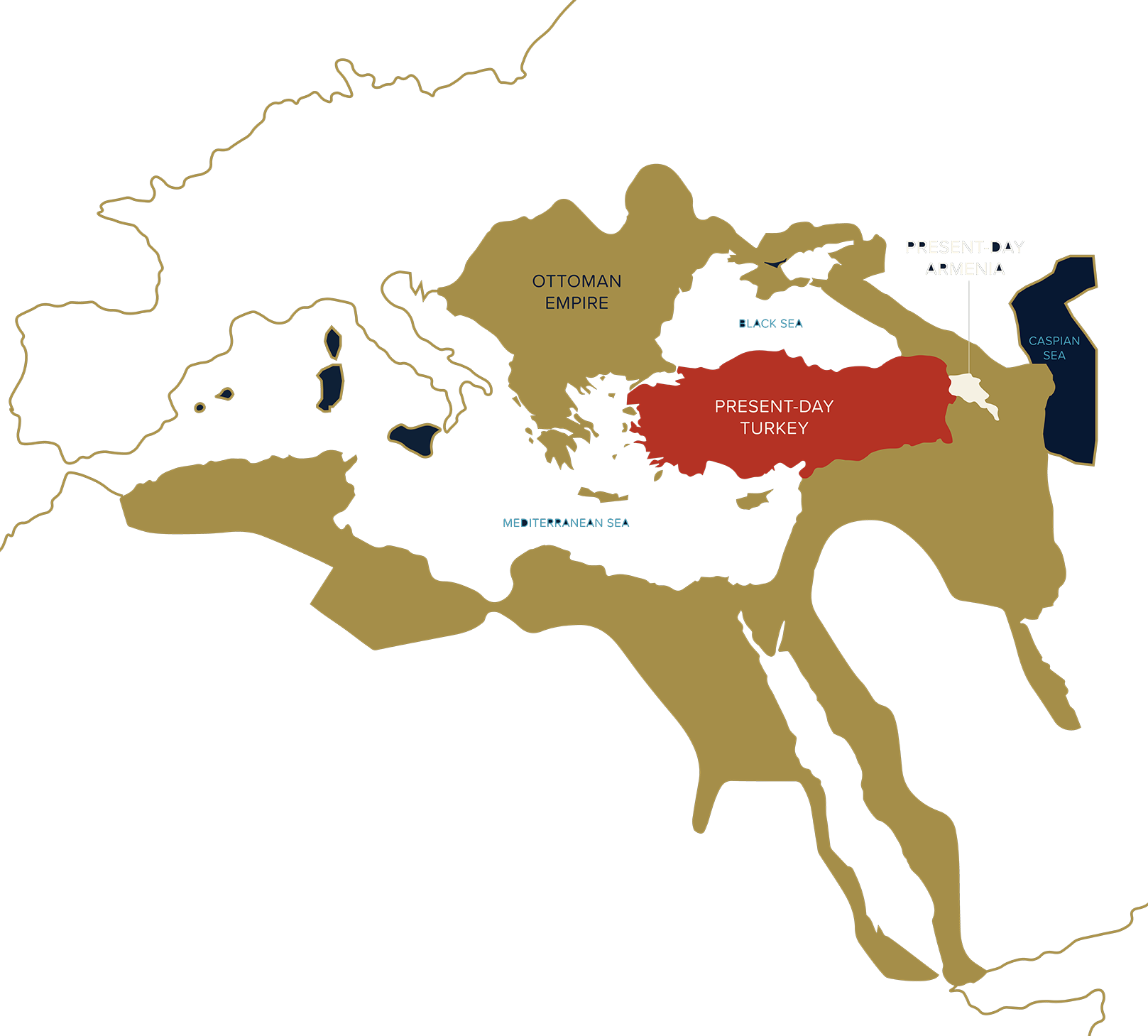
The Armenian Genocide was the Ottoman Empire’s systematic campaign during World War I to exterminate its Armenian population, a Christian minority that had long been the victim of persecution.
Beginning in 1915, across what is now modern-day Turkey, Armenians were arrested, sent on death marches, and held in concentration camps. By 1923, 1.5 million Armenians had been killed and hundreds of thousands more evicted from their ancestral lands.

Armenian refugees on a train in Palestine in 1918. American National Red Cross Photograph Collection, Library of Congress.
View this Item through the Library of Congress
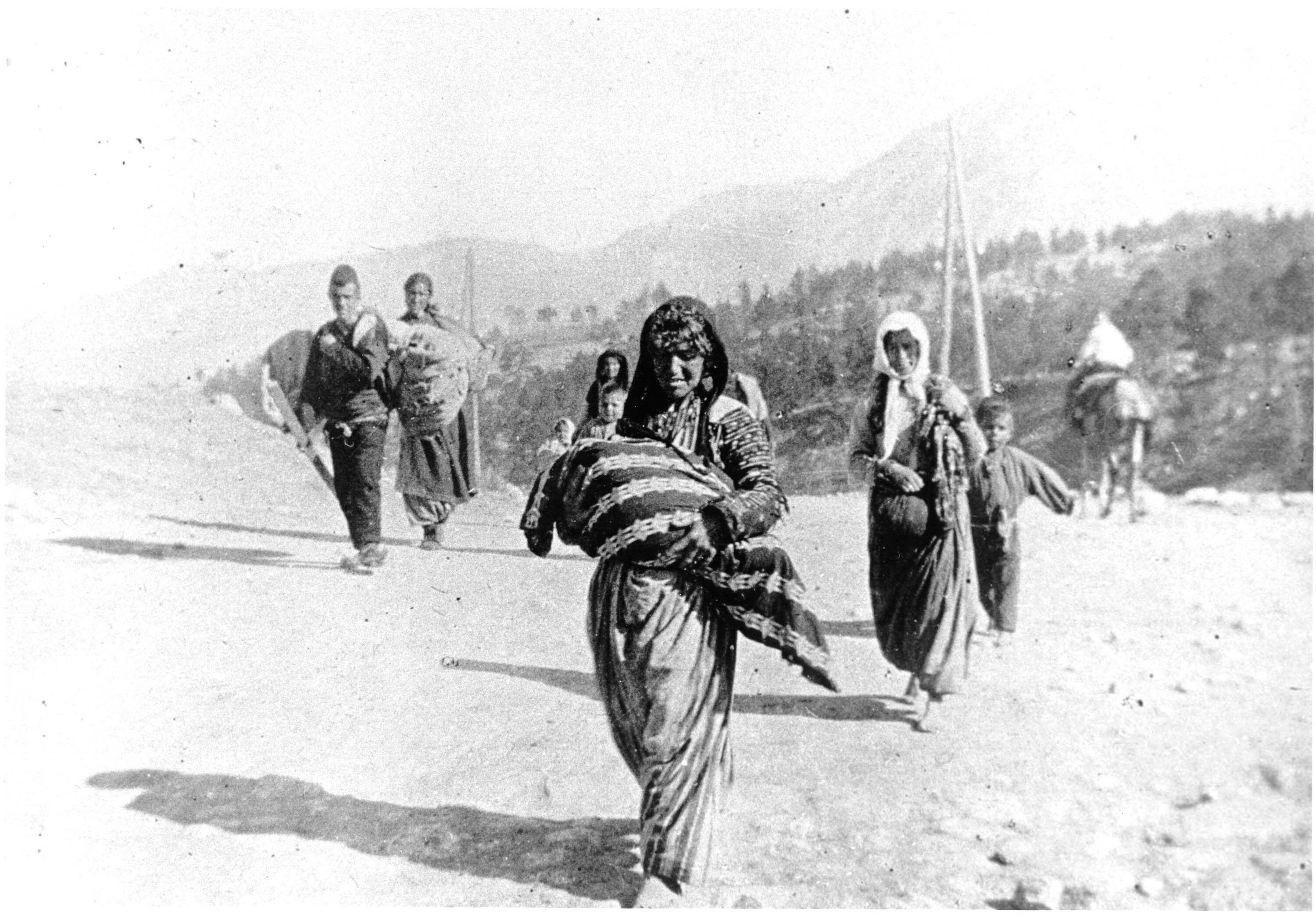
A family of Armenian deportees is seen in this 1915 photograph taken by Armin Wegner, a German soldier and medic in World War I.
Wegner’s images, primarily taken in deportation camps in the Syrian desert, are a key source of Armenian Genocide documentation. Alamy.
The Treaty of Sèvres, signed by the Allies of World War I and the Ottoman Empire in 1920, dismantled and divided the Ottoman Empire and guaranteed Armenians a national state, reparations for their losses, and prosecution of perpetrators. The treaty was eventually rejected, along with its promise of justice.
Replacing it was the Treaty of Lausanne, ratified in 1923. Notably, it included a declaration of amnesty – immunity for any crimes committed by the Ottomans or Turks between 1915 and 1923. The Armenians would not even receive an apology.
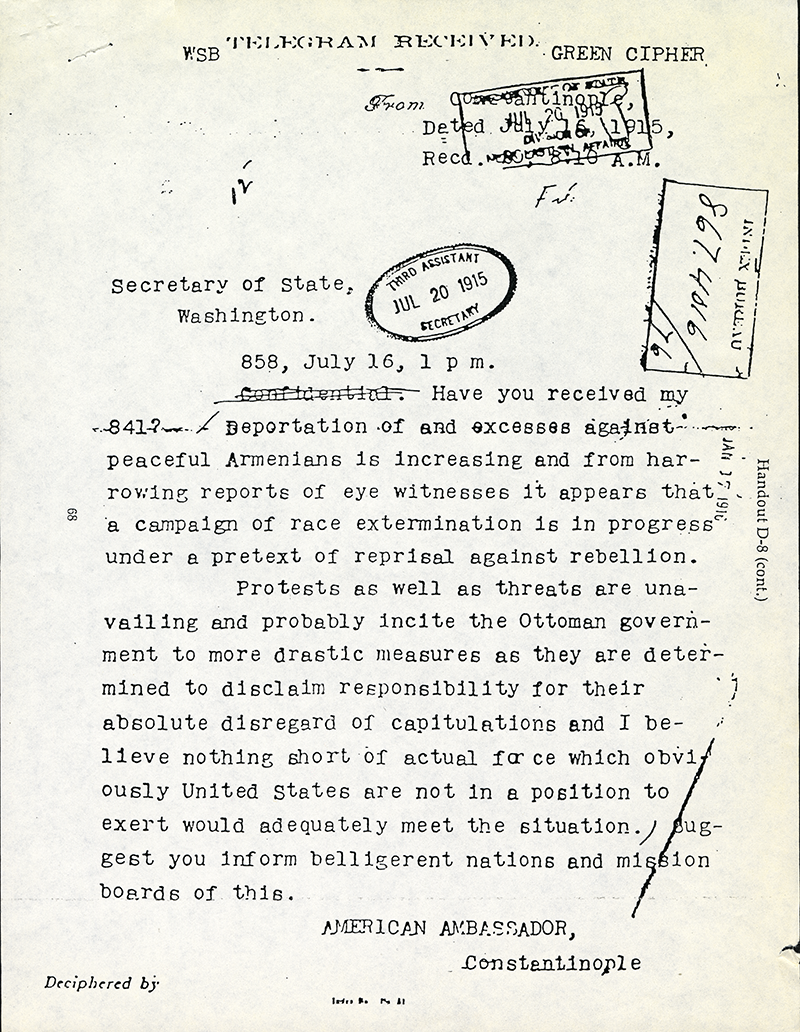 A telegram written by U.S. Ambassador to the Ottoman Empire Henry Morgenthau to the State Department on July 16, 1915, describing massacres of Armenians.
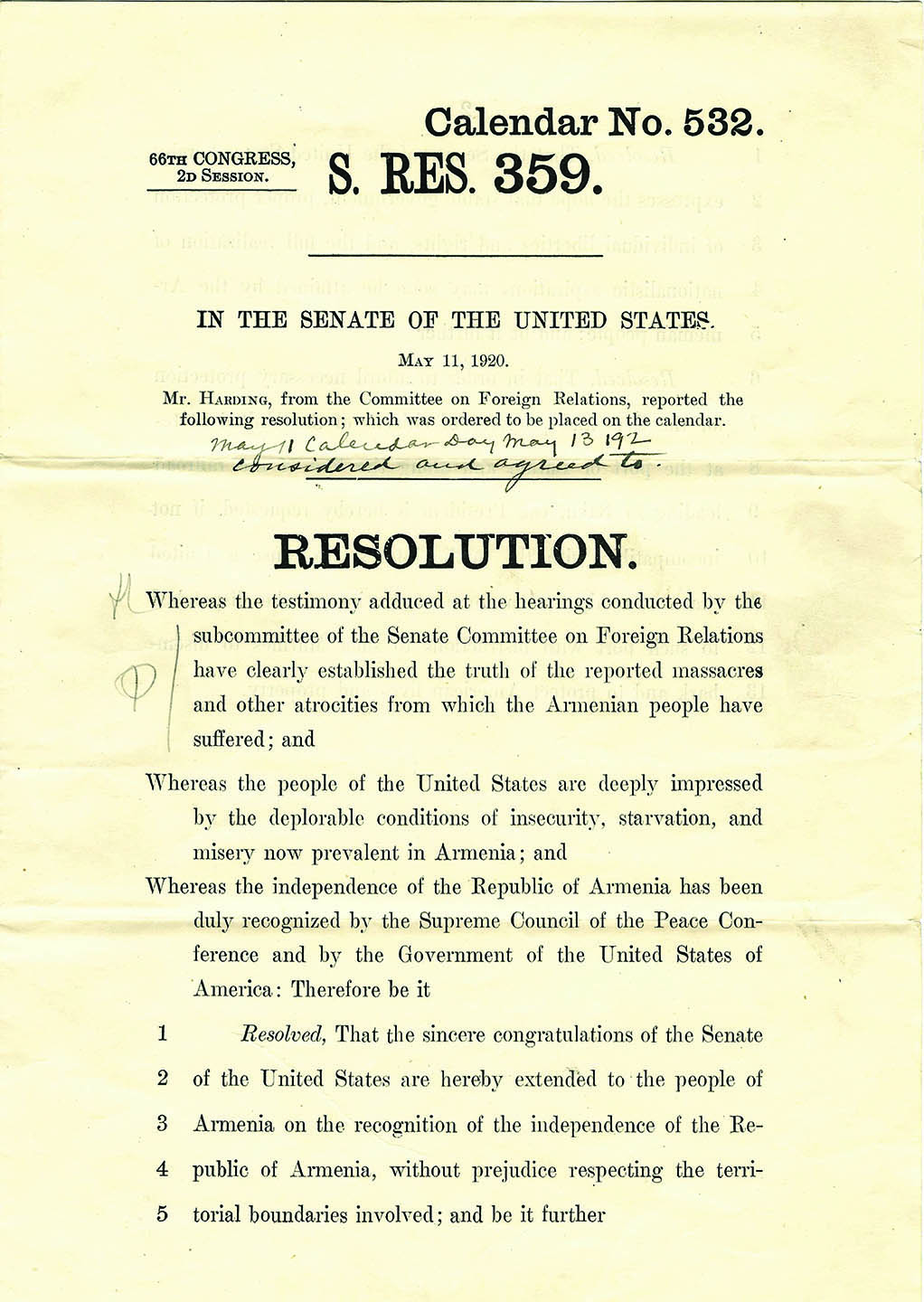
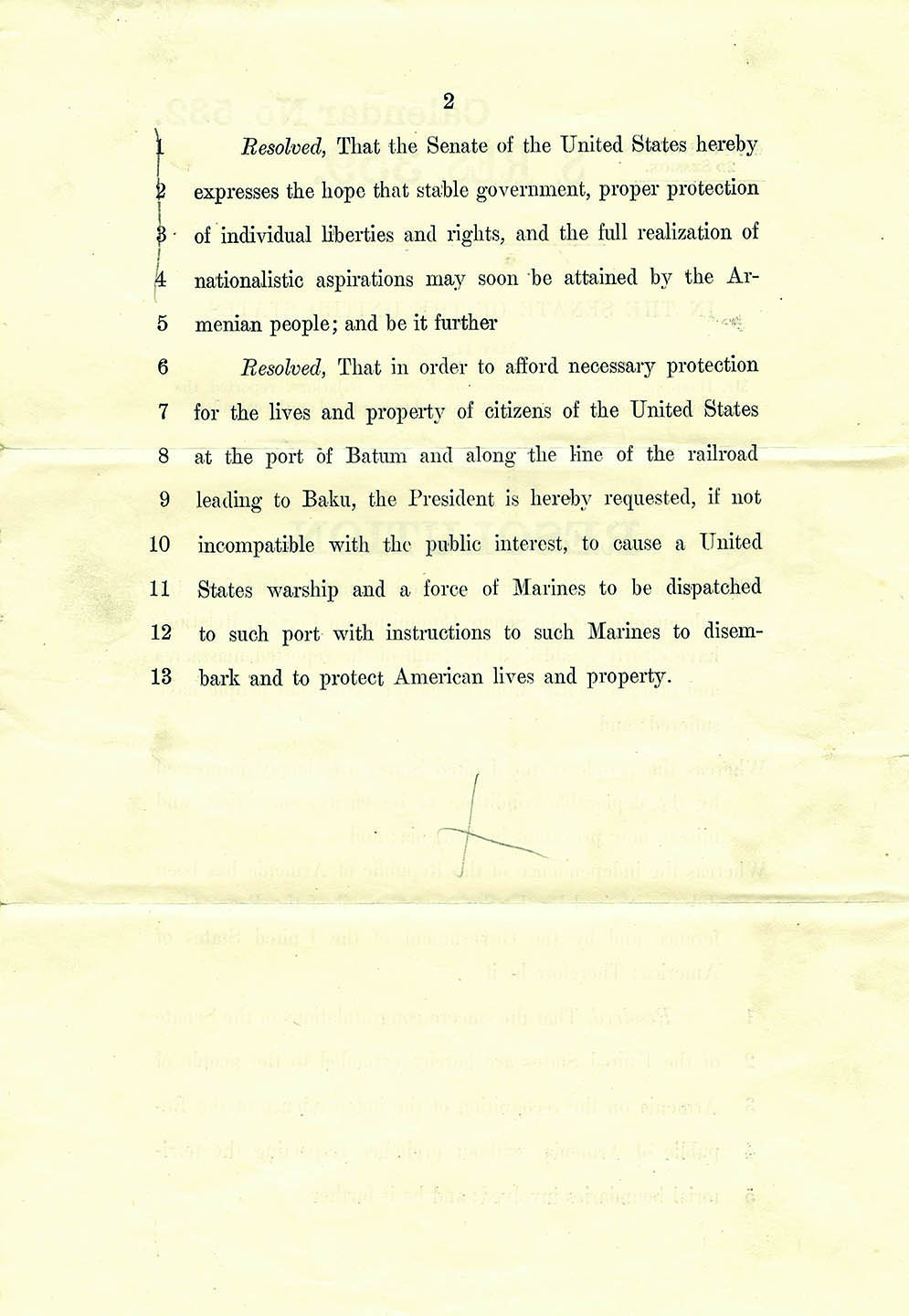
Senate Res. 359, page 2
Although the term genocide was not created until 1942, the atrocities of the Armenian Genocide were reported and affirmed in many instances, including Resolution 359, passed by the U.S. Senate in 1920. Center for Legislative Archives.
Although the Armenian Genocide largely faded from the world’s memory, it inspired the Holocaust in Europe decades later – so much so that as Adolph Hitler prepared troops to invade Poland in 1939, he said:
“…Our war aim does not consist in reaching certain lines, but in the physical destruction of the enemy… to send to death mercilessly and without compassion, men, women, and children of Polish derivation and language. Only thus shall we gain the living space which we need.
Who, after all, speaks today of the annihilation of the Armenians?”